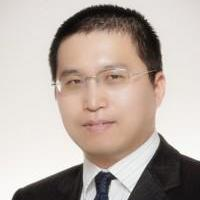
Welcome to Dr. Hao Tang’s Homepage
I am Hao Tang, Ph.D., P.E., an Associate Professor of Environmental Engineering and Environmental Engineering Program Director at Indiana University of Pennsylvania. My academic and professional work spans environmental engineering, water quality, treatment-process design, environmental data science, undergraduate education, and academic service. My background includes research, teaching, engineering practice, and program development, with a continuing interest in how emerging technologies can strengthen engineering education and environmental problem solving.
Research
My research has focused on the physical, chemical, and biological processes that govern water quality and treatment. Major areas have included disinfection and disinfection byproducts, water desalination, produced water, acid mine drainage, swimming-pool water quality, wastewater treatment, rainfall and runoff, and sustainable environmental processes. I have also worked on environmental data science approaches for modeling and analyzing water and wastewater systems.
My work has combined fundamental research with practical engineering applications. Before joining IUP, I worked in environmental consulting and process engineering and participated in the design of more than 50 packaged decentralized wastewater treatment systems. At IUP, I have led research involving water quality and environmental chemistry while mentoring undergraduate and graduate students in publishable research.
More recently, my interests have expanded toward the integration of artificial intelligence, machine learning, data-driven modeling, and computational tools into environmental engineering research. I am particularly interested in how AI can assist with the analysis of complex environmental datasets, treatment-system modeling, engineering optimization, and the development of new approaches to water-quality management.
Teaching
My teaching covers a broad range of environmental engineering subjects, including fluid mechanics, environmental aquatic chemistry, water and wastewater treatment, solid and hazardous waste management, and environmental engineering design. I have developed and taught several core courses while helping build IUP’s undergraduate Environmental Engineering program.
My teaching philosophy increasingly emphasizes the responsible use of AI-powered learning technologies. Generative AI, intelligent tutoring, automated feedback, and data-driven tools can provide students with new ways to explore difficult concepts, test ideas, and receive individualized support. At the same time, engineering education must continue to develop the abilities that AI cannot replace: critical reasoning, disciplinary knowledge, engineering judgment, and the ability to question results. My goal is not simply to teach students how to use AI, but how to think, evaluate, and innovate effectively in an AI-augmented engineering environment. This perspective formed the basis of my 2025 presentation, The Next Generation of STEM Education in the Era of AI.
Student Mentoring
Student research has been an important part of my academic work. I have mentored undergraduate and master’s students in environmental engineering research, including students who have published in peer-reviewed journals and continued into graduate study and professional practice. My goal is to help students move beyond completing assignments toward developing the ability to formulate questions, analyze evidence, defend engineering decisions, and communicate technical work professionally.
AI now provides another opportunity to strengthen this process. When used appropriately, AI can support literature exploration, coding, data analysis, visualization, model development, and technical communication. I am particularly interested in teaching students how to use these tools productively while maintaining scientific rigor, verification, transparency, and independent engineering judgment.
Service and Leadership
My service activities span the university, the environmental engineering profession, and the broader scientific community. At IUP, I have been involved in environmental engineering program development, faculty activities, undergraduate research, student exchange, seminars, and advisory-board activities. Professionally, I have served as a reviewer of more than 200 manuscripts for over 50 academic journals and publishers and have participated in proposal review for organizations including the National Science Foundation and U.S. Environmental Protection Agency.
I also serve as an Editor of AI Advances, where my interests in science, engineering, education, and artificial intelligence intersect.
Looking Forward
Environmental engineering is increasingly becoming a data-rich and AI-enabled discipline. My current interests lie at the intersection of environmental engineering, engineering education, data science, and artificial intelligence. I am interested not only in applying AI tools to environmental problems, but also in understanding how they can reshape the way engineers learn, conduct research, evaluate evidence, and make decisions. The objective is not to replace engineering fundamentals with AI. It is to combine strong scientific foundations and engineering judgment with new computational capabilities so that students and researchers can address environmental challenges more effectively, creatively, and responsibly.